

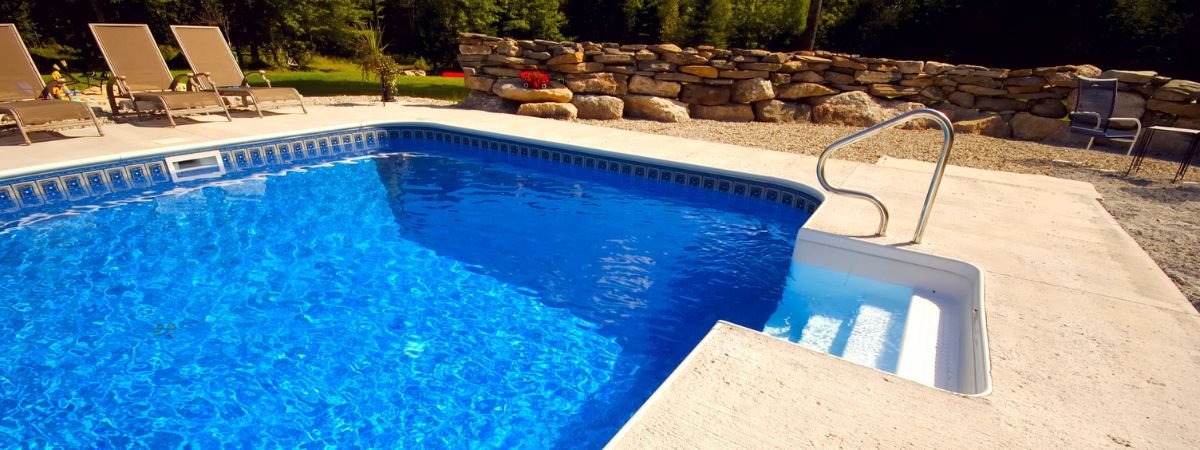
Have you ever looked at your backyard pool and thought, Wow, it looks perfect? The water is crystal clear, you can see every tile on the bottom, and it sparkles under the Florida sun. But then, you jump in, and something feels wrong.
Maybe your eyes start to sting. Maybe your skin feels itchy or sticky after you get out. Or perhaps your hair feels like straw. You check the water, and it’s still clear as glass. So, what’s going on? We call this the clear water trap. Just because you can see through the water doesn’t mean the water is healthy, soft, or comfortable. In this guide, we will explore the invisible things that make your pool water feel off and how you can get back to that silky, refreshing swim you deserve.
1. The Mystery of Invisible Irritants
When we talk about cloudy water, we are talking about dirt you can see. It’s like mud in a puddle. But when water feels off, we are talking about chemicals and microscopic things you cannot see.
Think of it like a cup of tea. If you put five spoons of sugar in it, the tea stays clear, but the taste and texture change completely. Your pool is the same way. Over time, it collects dissolved stuff that changes how the water feels against your skin. You can’t see the sugar, but you know it’s there. In your pool, you can’t see the imbalanced chemicals, but your skin and eyes definitely feel them.
2. Why Does the Water Feel Heavy or Sticky?
Sometimes, swimmers describe the pool water as feeling thick, heavy, or even syrupy. This usually happens because of something called TDS (Total Dissolved Solids).
In Florida, we use our pools all year round. Every time someone swims, they leave behind tiny amounts of things that dissolve into the water. Think about everything that goes into the pool:
- Sunscreen and tanning oils: These are the biggest culprits in Florida.
- Sweat and natural body oils: Even if you aren’t sweating, your skin releases oils.
- Beauty Products: Deodorant, hair spray, makeup, and laundry detergent for swimmers.
Even though your filter is great at catching hair, leaves, and dirt, it is not designed to catch dissolved liquids. Eventually, the water becomes saturated. It’s like a sponge that is so full of water it can’t hold another drop. When your pool reaches this point, the water feels sticky on your skin. No matter how much you run your filter, the water won’t feel light or thin again until you address the saturation.
3. The Pool Smell Myth: The Truth About Red Eyes
We have all been to a public pool or a hotel pool that has a very strong chlorine smell. Most people think there is way too much chlorine in here.
The truth is actually the opposite.
That strong chemical smell comes from chloramines. Chloramines are created when active chlorine (the good stuff) attaches itself to sweat, nitrogen, and oils (the bad stuff). Once they attach, the chlorine is used up. It becomes combined chlorine.
This old chlorine is what causes the following:
- Stinging, red eyes: It irritates the delicate lining of your eyes.
- Strong chemical odours: Real chlorine actually has almost no smell.
- Itchy, dry skin: Chloramines are much more irritating than pure chlorine.
If your pool water looks clear but smells strong, it is actually a sign that you don’t have enough active chlorine to finish the job. Your pool needs a reset to burn away that old, tired chlorine.
4. Why Your Skin Feels Sharp After a Rainstorm
Florida is the lightning capital of the world, and we get a lot of rain. Even if a summer storm doesn’t wash dirt into your pool, the rain itself changes the balance of the water instantly.
Rainwater is usually acidic. When it mixes with your pool, it lowers the pH level.
- Low pH (Acidic): This makes the water feel sharp or aggressive. It strips the natural protective oils from your skin and hair. This is why your hair might feel like straw after a swim.
- High pH (Alkaline): This makes the water feel slippery or slimy, almost like there is soap in the water that won’t wash off.
For a perfect swim, the water needs to stay in a sweet spot (around 7.4 to 7.6 pH). This is the same as the natural pH of a human eye! When the pool matches your body, you don’t even feel the water; it just feels like an extension of you.
5. The Sandpaper Effect: Calcium Hardness

Have you ever reached out to touch your pool steps and felt like you were touching sandpaper? Or have you noticed white, crusty flakes forming around your tiles? That is calcium.
In South Florida, our tap water is often hard water, meaning it has a lot of minerals.
- High Calcium: If there is too much calcium, the water feels crispy or hard. It makes it difficult for soaps or shampoos to rinse off your skin, leaving you feeling itchy after you dry off.
- Low Calcium: If there is too little calcium, the water becomes hungry. It will literally try to eat the minerals out of your pool’s plaster or pebble finish to balance itself. This makes your pool surface feel rough and jagged.
Quick Troubleshooting: The water comfort Guide
| How the Water FEELS | What it LOOKS Like | The Invisible Culprit | The Simple Solution |
|---|---|---|---|
| Eyes Sting / Strong Smell | Crystal Clear | Chloramines (Used-up Chlorine) | Shock the pool at night. |
| Itchy Skin / Dry Hair | Clear | Low pH (Acidic Water) | Add a pH increaser. |
| Slippery / Slimy Skin | Slightly Dull or Clear | High pH (Basic Water) | Add a pH Reducer. |
| Sticky / Heavy Water | Clear but tired | High TDS (Old Water) | Drain 20% and add fresh water. |
| Rough / Scratchy Water | White flakes on tiles | High Calcium Hardness | Professional water balancing. |
| Oily Film on Surface | Clear with a sheen. | Sunscreen & Body Oils | Use an enzyme treatment. |
6. Florida’s Unique Problem: The Sunscreen Film
In places like Coral Springs, Parkland, and Fort Lauderdale, the sun is intense. We have to use a lot of sunscreen to stay safe. While sunscreen is great for your skin, it is very tough on your pool’s health.
When sunscreen washes off in the water, it doesn’t just disappear. It creates an invisible organic film on the surface. This film does two bad things:
- It traps heat: It prevents the water from breathing, making the pool feel too warm and unrefreshing.
- It clogs the filter: It coats your filter media in a greasy layer, making the filter less effective.
7. The Role of Cyanuric Acid (The Chlorine Sunscreen)
There is a chemical called cyanuric acid (CYA), often called stabiliser. Think of it as sunscreen for your chlorine. Without it, the Florida sun would burn away all your chlorine in just a few hours.
However, you can have too many good things. If your CYA levels get too high, it locks your chlorine. Your test kit might show that you have plenty of chlorine, but that chlorine is trapped and can’t actually kill germs or clean the water. This leads to water that looks clear but is actually filled with invisible bacteria that can make you feel itchy or even get you sick.
8. Don't Forget Your Pets!
We know many Florida families have water dogs who love to jump in. While it’s fun to watch your lab or golden retriever splash around, dogs bring a lot into the pool.
- Dander and fur: These clog filters quickly.
- Natural oils: A dog brings about 10 times the amount of organic waste into a pool as a human does.
If your dog is a frequent swimmer, your water might feel off much faster. You may need to run your pump longer or use specialised enzymes to keep the water feeling fresh for both the humans and the pups.
9. How to Get the New Pool Feeling Back
If your water looks clear but feels bad, you don’t have to live with it. Here is a step-by-step guide to fixing the comfort of your water:
Step 1: Perform a chemical reset
Sometimes the water just needs a fresh start. Using a high-quality pool shock at night (when the sun is down) can break down the invisible oils and chloramines. By morning, the off feeling is usually gone.
Step 2: Check Your alkalinity
Think of Alkalinity as a bodyguard for your pool. It stops the pH from jumping around. If your pool water feels different every day fine on Monday but stinging on Tuesday your Alkalinity is likely too low. Keeping it between 80-120 ppm ensures a steady, comfortable swim.
Step 3: The dilution solution
In Florida, the heat causes a lot of evaporation. When water evaporates, only the pure H2O leaves. All the chemicals, salt, and minerals stay behind and get more concentrated. Over time, the water gets salty and thick. Once every year or two, it is a great idea to drain about 10-20% of your pool and refill it with fresh tap water. It’s like giving your pool a fresh drink of water.
Conclusion: You Deserve a Better Swim
Why does some water feel so much better than others? It’s all about surface tension. When your chemicals are balanced, the surface tension of the water is lower. This allows the water to move smoothly over your skin.
When the water is hard or filled with TDS, the surface tension is higher. It feels like the water is pushing against you. By balancing the minerals and removing organic waste, we create water that feels light and effortless to move through. This is the difference between a pool that is just okay and a pool that feels like a high-end spa.
If your water looks perfect but feels wrong, your pool is telling you it needs a professional touch. At Gator Pool Services, we handle the complex science so you can focus on the splashing. Don’t guess with your chemicals. If your water feels heavy or irritating, please contact us. We offer expert water analysis and maintenance across Florida to give you that new pool feeling back instantly.